Zhuangzi’s butterfly dream: who are we when we dream?
A brief story from the Zhuangzi opens a spacious question about identity, perspective, and the feeling of being someone else.
A butterfly, then a question
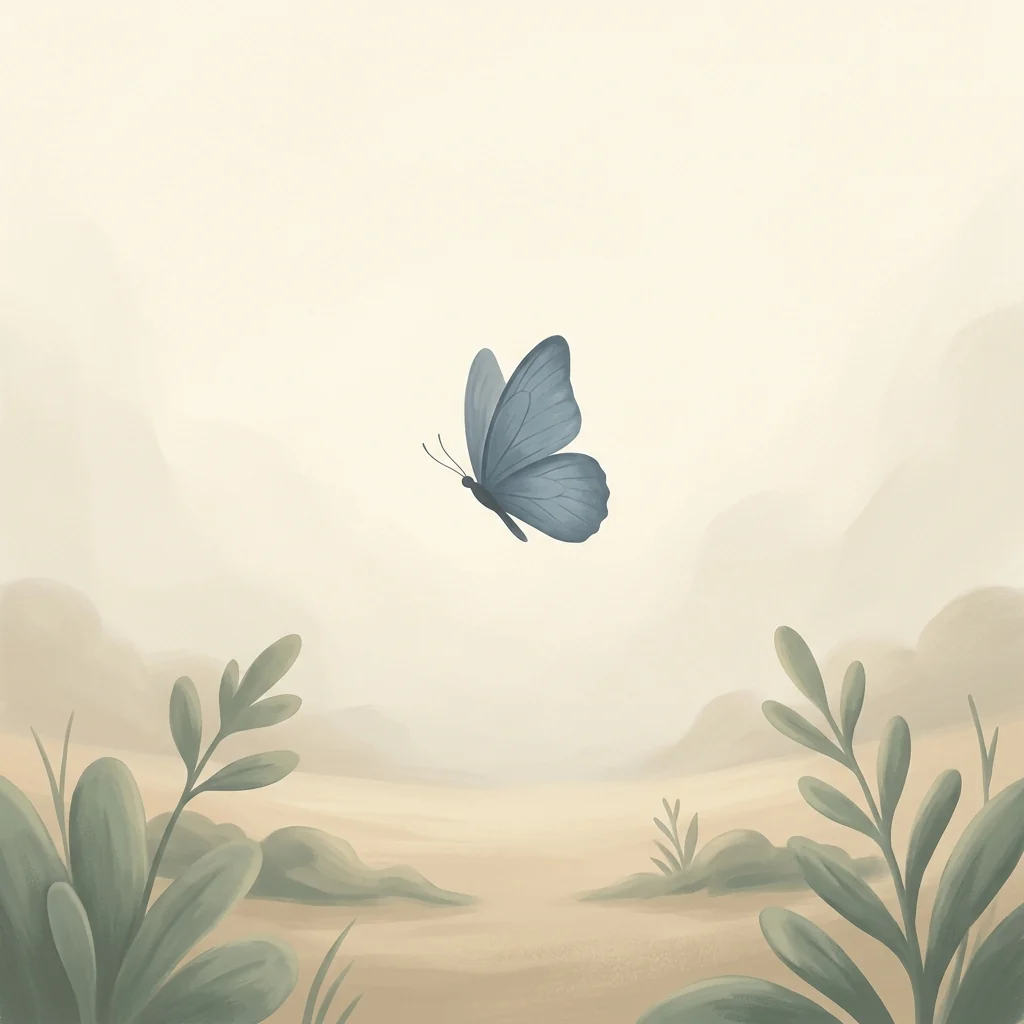
At the end of the second chapter of the Zhuangzi, Zhuang Zhou dreams that he is a butterfly. Flying about, he is absorbed in being that creature. He does not know himself as Zhou. Then he wakes, recognisably himself again, and a question arrives: had Zhou dreamed the butterfly, or was a butterfly now dreaming Zhou?
The final lines keep Zhou and the butterfly distinct while naming the transformation of things. That tension is part of the story’s fascination. This retelling follows James Legge’s translation of chapter two, available alongside the Chinese text.
Our reading: leave a little room for uncertainty
We read the butterfly as an invitation to notice how convincing a perspective can feel while we inhabit it. The dream is complete from the inside; waking introduces another view. This is one way to engage with the story, rather than a claim that its philosophical questions have a single settled answer.
You can bring that openness to an ordinary journal entry. An interpretation may feel compelling on Monday and less useful on Friday. Writing a second possibility beside the first can preserve something valuable: your freedom to keep thinking. You do not need to turn a remembered image into a permanent definition of yourself.
Begin with what it felt like
Imagine a fictional dream in which you drift over a garden. Before deciding that flight means freedom, describe the flight. Were you choosing the direction? Was the air warm? Did you want to land? Perhaps the scene felt joyful. Perhaps being unable to touch the ground was frustrating. The same broad image leaves room for very different experiences.
Try giving the sensation its own sentence: “I felt light, but I missed the ground.” Then give your waking response another: “Remembering it, I feel curious.” These are observations you can return to. They do not require you to solve the dream, and they leave its mixed feelings intact.
Let an image have more than one association
A butterfly might remind you of a childhood garden, a science lesson, a recent walk, or nothing in particular. Start with the association that actually comes to mind. If a familiar symbol description does not fit, there is no need to borrow it. Your remembered setting, mood, and circumstances can be more interesting than a ready-made label.
You might write two possible connections and then leave both open. One could concern an ordinary event; the other could be a creative comparison. Label them as possibilities. The purpose of the page is to make your thinking visible, including the places where you are unsure.
A small entry to try
Choose one dream you feel comfortable revisiting. Describe who you seemed to be within it, what felt natural there, and what surprised you after waking. Finish with a question: “What would I like to understand about that difference?”
Leave a little blank space beneath your answer. Another thought may arrive later, or it may not. A journal can hold an unfinished question just as carefully as an insight.
Sources & further reading
While you’re here, make a little room for your own dreams.
Explore a dream in your own words