
Carl Jung and the stone: a story about changing perspective
In a childhood memory, Jung imagines a familiar stone’s point of view. The episode offers a thoughtful starting place for exploring dream images.
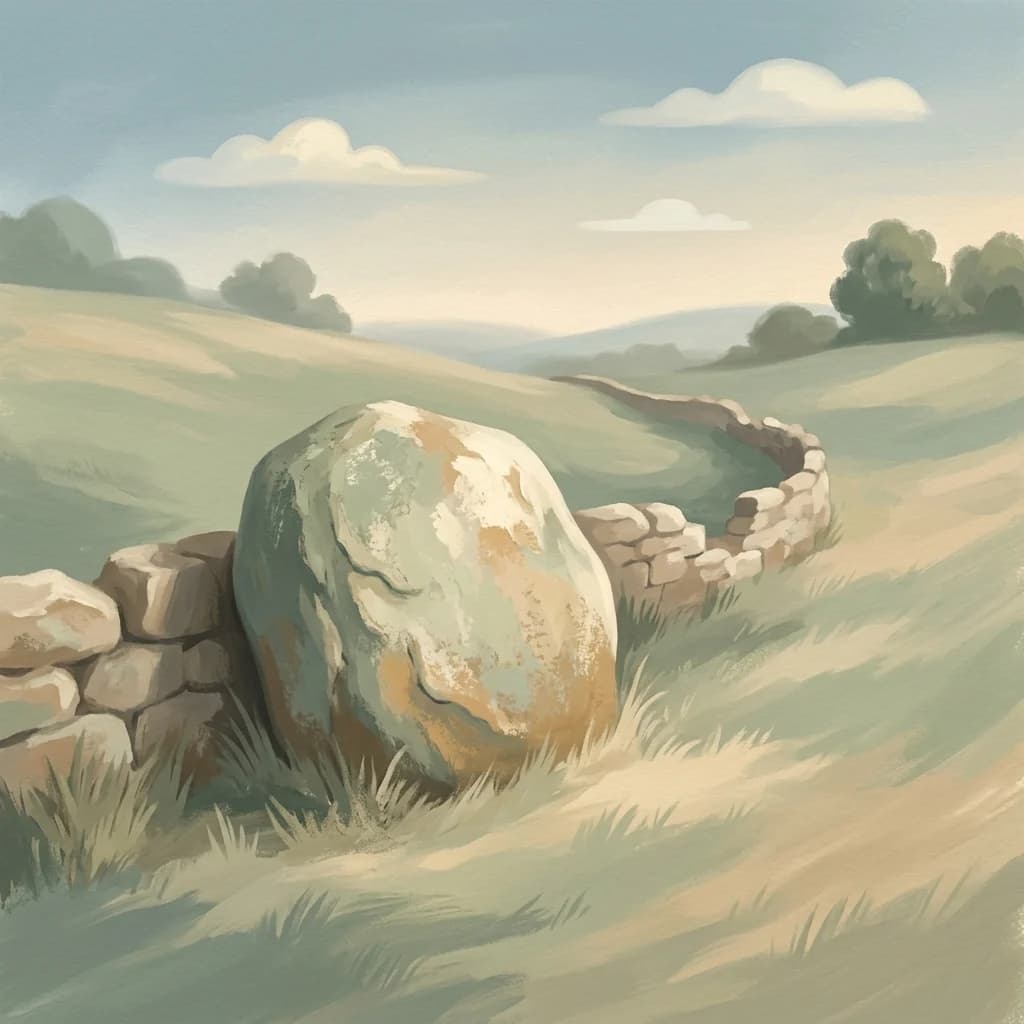
The boy and the stone
In “First Years,” a chapter of Memories, Dreams, Reflections, Carl Jung remembers sitting on a particular stone near a garden wall. He would imagine the scene from both sides: himself resting on the stone, and the stone with a boy resting upon it. Moving between those perspectives left him fascinated and uncertain about which position belonged to him. Read the passage and its memoir reference, printed page 171.
He describes a strong personal connection to the stone and the powerful return of that childhood experience when he revisited the place as an adult. This is a remembered waking imaginative game, not a report of a night dream. The memoir, prepared with Aniela Jaffé, presents his experience and later reflections; it is not evidence that the stone possessed a mind.
Our reading: give the background a turn
What interests us is the change of viewpoint. Something apparently ordinary becomes worth considering when it is allowed to occupy the centre of a scene. We can borrow that literary move for journaling without treating our imagined answer as a discovery about the object itself.
Think of a fictional dream about waiting beside a closed door. Your first entry might follow the person waiting: what they want, what they fear, what happens next. A second entry could begin with the door’s position in the scene. Is it keeping something out, sheltering something within, or simply waiting to be opened? These are questions for your imagination, not instructions hidden in the dream.
A conversation you know you are inventing
If you enjoy creative writing, choose a neutral object from a dream: a bench, a cup, a window, or a path. Describe what you remember before adding anything new. Then start a separate paragraph labelled “Imagined perspective.” Give the object a few sentences about the scene, using whatever words occur to you.
A cup might say that it is full, empty, waiting, or warm. Those words are choices you are making now. You can change them, cross them out, or decide that the exercise has not offered anything useful. Keeping the imagined paragraph separate makes it easier to preserve the original memory without silently rewriting it.
Notice what belongs to you
Read the two paragraphs together and notice what catches your attention. Perhaps you used the word “waiting” several times. Ask what you associate with waiting today, and allow an ordinary answer. It might remind you of an unfinished errand, a conversation you hope to have, or a book you were reading. A connection can be modest and still be interesting.
You can also write that no connection comes to mind. There is no requirement to find a revelation or to agree with the voice you invented. Treat the exercise as a way to hear your own language from a slightly different angle.
Keep the question gentle
For your next comfortable dream entry, try this prompt: “Which quiet detail have I overlooked, and what do I associate with it?” Describe the detail first. Explore a possible meaning only if you want to.
You do not need to recreate Jung’s experience or reach his conclusions. A few attentive sentences are enough to give an ordinary image a place on the page.
Sources & further reading
While you’re here, make a little room for your own dreams.
Explore the illustrated dream reflections